Saturday, 26 March 2016

The Cognitive Learning Theory



The Cognitive Learning Theory


Cognitive learning theory revolves around the idea that people are rational being they obviously make choices that seem the most sensible or make the most sense when purchasing a product (Lisa Fritscher 2014). A big convenience for companies on persuading customers that they need a product. This is due to the perception that people determine their choices largely based on the best way to solve a problem. Marketers take advantage of this problem solving approach and provoke underlying intention in consumers or boast the need for their specific product to resolve needs due to superiority, social behavioral situations or convenience. A great Example of this would be the “AHH bra” infomercials that are on prime time television.


Despite fact that its not the traditional lingerie bra showing elegance and sexiness. The marketers of “ahh bra” have created a very successful campaign by being able to appeal to sense of women needing to solve the problems that ‘every day’ bras create by promising their audience that the ahh bra will not cut you into portions and will immediately adapt to your size.

While behavioral learning theories propose that all learning was the outcome of organization formed by conditioning, reinforcement and punishment based on Ivan Pavlov research. Cognitive learning theory stresses the importance of internal mental process. Albert Bandura is physiologist who conducted an observational learning research 1961 where he proposed that learning can also take place simply by observing the actions of others. Which revolves around the idea that people learn through observation to their own experience. Bandura's  argued that people can learn new information and behaviors by watching other people. One important aspect of a cognitive learning perspective is observational learning. Change in people’s actions and behaviors that takes place as a result of watching others. When an observer’s behavior changes after viewing the behavior of a model. An observer’s behavior can be affected by the positive or negative consequences – called vicarious reinforcement or vicarious punishment – of a model’s behavior. (Bandura 1986)when an observer’s behavior changes after viewing the behavior of a model. An observer’s behavior can be affected by the positive or negative consequences – called vicarious reinforcement or vicarious punishment – of a model’s behavior. (Bandura 1986). This type of learning is a complex process; people store these observations in memory as they accumulate knowledge, perhaps using this information at a later point to guide their own behavior. 

Modelling Process 

Modelling is the process of imitating the behavior of others. For example, a woman who shops for a new kind of perfume may remember the reactions her friend received when she wore a certain brand several months earlier, and she will mimic her friend’s behavior with the hope of getting the same feedback. Not all behaviors are effectively learned. Components that involves both model and learner can emulate social learning success. Achieve this there are certain requirements and steps to follow which is part of modelling/observational learning process.


This model illustrates the modelling process of how an advert would catch the attention of the consumers. Retention is where the consumers recall the behavior and process the ability to use the product. Finally for the observation learning to be successful the consumer has to be motivated  to imitate the behavior that has been modeled.


Bandura and other researchers discovered that there are many factors that influence the likelihood that an observer will imitate a model. If the model is perceived by the observer as similar to him or her, the behavior is more likely to be copied than if the model is perceived as different. Also, if the model is modeling simple behaviors, those are more likely to be mimicked than complex behaviors. Regardless of the attributes of the model or the observer, if the behavior itself is associated with a reward that is meaningful to the observer, modeling is more likely to occur than if the behavior is followed by no such reward.


Subway advertisement is an example of how ads were created in which a model (in the Bandura sense or the fashion industry sense) illustrates the rewards or punishments of a particular behavior e.g by eating healthy sandwich could result to weight lose and that athletes eat this as well. This attempts to sell people a particular product that center around the benefits that the product has brought to a model. "Jared," who has been featured in ads for Subway® restaurants for years, is one such model. Jared's basic message has been that by eating Subway sandwiches, he lost a significant amount of weight. The implication, of course, is that viewers can learn from Jared's experience and enjoy similar results.


Reference

Houghton Mifflin Textbook - To Learn More. (2016). College.cengage.com. Retrieved 13 April 2016, from http://college.cengage.com/psychology/engler/personality_theories/7e/students/learn_more/ch09.html

Bandura and Observational Learning. (2016). Boundless. Retrieved from https://www.boundless.com/psychology/textbooks/boundless-psychology-textbook/learning-7/cognitive-approaches-to-learning-48/bandura-and-observational-learning-203-12738/

Bandura, A. (1986). Social foundations of thought and action. Englewood Cliffs, N.J.: Prentice-Hall.

Solomon, M. (2011). Consumer behavior. [S.l.]: Prentice Hall.


Tuesday, 9 February 2016

Consumer Learning

Consumer Learning

Learning is the knowledge or skills gained and the changed in peoples behavior based on experience (Solomon, 2011). However learning is not always intentional. An individual can learn without even trying. People recognize brands and hum to product jingle even if that person does not personally use that product or services. This process is called incidental learning. Marketers really tap into this. An example is MacDonald's marketing commercial. Most of their commercial advert have the hum at the end followed by the tagline. Almost everyone recognize the jingle and the I'm lovin it tagline straight after the jingle. 


Learning is  a continuous process the more people are expose to new stimuli the more it allows people to modify their behavior. The approach to learning ranges from a consumers simple association between a stimulus such as a product logo for example KFC and the response is fast food. 

There are several types of learning theories two these includes behavioral which is the reaction to stimuli and cognitive theories which is how the brain process stimuli.


Behavioral Learning Theory

Behavioral learning theory presume that learning that takes place due to the result of responses to external events. The two major approaches to learning represent this view: Classical conditioning and Instrumental conditioning.  


Classical conditioning exists when a stimulus that evoke a response is paired with another stimulus. Ivan Pavlov a physiologist conducted a research on dogs and induced classically conditioned learning by pairing a neutral stimulus (bell) with something that would make a dog salivate (squirting meat powder on a dogs mouth). The powder became unconditioned stimulus because it can already create feedback. Later on, the bell became a conditioned stimulus because the dogs learned  that bell would always be presented with food. Therefore whenever the dogs hear the bell it represents feeding time. The dogs were conditioned to respond to the sound of the bell. Marketers really tap into this by making consumers associate feelings to the things they see. They want to make consumers associate their products to their daily lives to the feeling they got when they saw it. They want to get conditioned response consumers or audience. 


The World No Tobacco Day advertisement makes viewers associate smoking with death and provokes sensation of fear smoking again because there's the risk that they might die due to the cigars they smoke. 


Also using a celebrity in advertisement creates unconditioned stimulus which then leads to the positive conditioned response of the audience because this only heightens the value of the product being offered.


Instrumental Conditioning 


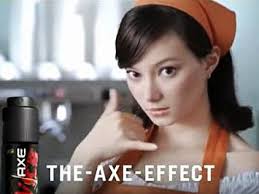
It occurs when consumer's learn to perform actions that creates positive results and steer away from negative outcomes. Instrumental conditioning produces reward after a certain behavior is performed and it exists three ways: Punishment Positive and Negative Reinforcement. Positive reinforcement in the form of reward which strengthens the response and consumers learn the correct behavior.  


This Axe advert persuade users that by choosing to use their brand you would have positive response e.g. the woman instructing you to call her. 

Unlike positive reinforcement, negative reinforcement used negative outcomes that serve to encourage the right behavior. Which anti smoking adverts uses this type of marketing strategy. By showing death as negative outcome for people to change their behavior and quit smoking. 

Reference 

Solomon, M. (2011). Consumer behavior. [S.l.]: Prentice Hall.
Bandura and Observational Learning. (2016). 
Boundless. Retrieved from https://www.boundless.com/psychology/textbooks/boundless-psychology-textbook/learning-7/cognitive-approaches-to-learning-48/bandura-and-observational-learning-203-12738/


Wednesday, 20 January 2016

Product Placement

Product Placement is an increasing promotional strategy of which branded products appear in movies. Balasubramanian (1994) define product placement as a paid messages targeting movie audiences by inserting branded products into a movie. This a marketers way of a more sophisticated yet intrusive ways of showing their products through big screen movies. A perfect example of product placement in movie is the brands used throughout James Bond Spectre. 


The James Bond movie is probably one of the most popular movie in the world.Throughout James Bond Spectre movie the actors can be seen using popular big brands of cars. Daniel Craig was driving an Aston Martin on the film. A Fiat 500 interrupts the car chase scene that tears through the streets of Rome.Jaguar‘s C-X75 concept is driven by villain Mr. Hinx in the Rome chase. Land Rover Defender (seen with sibling Range Rover Sport SVR in the Austrian action scene). Mercedes-Benz is spotted at Monica Bellucci’s mansion and Rolls-Royce 1948 Silver Wraith picks up Bond in the desert, recalling the brand’s role in Goldfinger. Having said that after signing a deal with Heineken a bottle can be spotted in the hotel room at Hotel L’Americain in Tangier, Morocco in one part of the movie. These are just some of the brands used in James Bond Spectre Movie.

According to Solomon, (1999) product placement can be split into two different type. On-set placement is when a specific product is inserted into an actual film scene, as when a specific alcohol is are focus in a bar scene. For example Belvedere vodka is stirred, not shaken, in Bond’s martini. This shows not only the brand of the alcohol but also influencing audience how to drink Belvedere. Creative placement is finding ways to insert actual brand into filming to show in outdoor advertising. For example Apple iPad in Modern Family iPad being the main point of the story was aired just three days before the stores started selling Apple’s new gadget. The Plot was to buy their dad an iPad for his birthday, which correspond with the device’s launch day. However, his family didn't pre-order it. The product was added in the plot; it was mentioned in different contexts, it was shown on the screen, it was used and it achieved the “I want to buy this product!” effect.


Reference

brandchannel:,. (2015). The Brands In Spectre — 007 Product Placement in James Bond's 24th Film. Retrieved 7 February 2016, from /http://brandchannel.com/2015/11/08/spectre-bond-product-placement-110815/

Solomon, M. (1999). Consumer behavior. Upper Saddle River, N.J.: Prentice Hall.

Balasubramanian, S. (1994). Beyond Advertising and Publicity: Hybrid Messages and Public Policy Issues. Journal Of Advertising, 23(4), 29-46. http://dx.doi.org/10.1080/00913367.1943.10673457

Brands & Films,. (2011). Top 40 Product Placements of all time: 10-1 - Brands & Films. Retrieved 7 February 2016, from http://brandsandfilms.com/2011/01/top-40-product-placements-of-all-time-10-1/


Thursday, 17 December 2015


Perceptual Processes in Marketing


The perceptual process begins with receiving stimuli from the environment and ends with our interpretation of those stimuli. Attended stimulus is when we pay attention to one certain specific thing in our environment. Then the stimulus are interpret based on our distinctive needs and experiences.


From Sensation to Perception


Sensation refers to the immediate response of our sensory receptors, (e.g. eyes, mouth, nose, ears and fingers). Whereas Perception refers to the process of selecting, organizing and interpreting stimuli. However, the study of perception only focuses on what has been taken off and added on when assigning a meaning to these sensation.


The controversial advert of Benetton is an example of subjective nature of perception. This is due to the negative criticism it received, the ad was targeted of many complaints about racism. After it showed an African - American man and a white man handcuffed together. Even though they dressed the same. People assumed that the African-American man was arrested by a white man. People’s assumptions tainted the ad’s meaning. This type of assumptions or interpretations is the set of people’s beliefs and feelings also called schemas.


Sensory System


Sensory inputs or external stimuli can be received on a number of channels. Some sensory inputs provoke historic imagery of which previous events occurred are recalled. Whereas fantasy imagery is when an entirely new imaginary experience is the response to sensory data. These responses are vital part of hedonic consumption. Because the data we receive from our sensory systems determine how we responds to products.

Sensory Marketing


What appeals to us is govern by our senses and this happens in many different ways. Marketers use sensory marketing that appeals to all the senses in relation to the brand. In order to relate with customers on an emotional level. Brands can interpret emotional connection in the customers' mind by triggering their senses. Therefore marketers use human senses to activate customers' emotional connection with the brand. 

A Virtual Honeymoon to London and Hawaii #GetTeleported


For example Marriott Hotels’ new Teleporter. The company is using Oculus Rift technology to allow guests to virtually explore holiday destinations, such as Hawaii. Its “4D technology” enables teleported guests to physically feel aspects of the environment they are in, for example, installed heaters can simulate the sun on your face, while a water sprayer can make you feel the sea spray hitting your skin. This an example of Sensory Marketing simultaneously targeting various senses to create a marketing experience for the customer.  

According to the research customers' experience higher level of attachment when they touch the product. Of which consumer researchers are examining the role that haptic sense (touch) plays in consumer behavior. Which is true this certainly apply before purchasing a product. We are surer about what we perceive if we can touch it. However, this is difficult for the tourism industry due to the nature of the

product. With the issue of intangibility where as other product such as mobile phones that you can just touch. Apple customers are allowed to browse around the store and touch the phones on display giving them the freedom to experience the product. Which shows how Apple manipulate sensory marketing to appeal to customer's emotional experience and associate it with their brand.

Reference 

Sensory marketing: the brands appealing to all five senses. (2014). the Guardian. Retrieved 13 March 2016, from http://www.theguardian.com/media-network/2014/oct/27/sensory-marketing-brands-senses-technology

Boundless. “Introducing the Perception Process.” Boundless Psychology. Boundless, 20 Aug. 2015. Retrieved 13 Mar. 2016 from https://www.boundless.com/psychology/textbooks/boundless-psychology-textbook/sensation-and-perception-5/introduction-to-perception-39/introducing-the-perception-process-167-12702/

Solomon, M. (1999). Consumer behavior. Upper Saddle River, N.J.: Prentice Hall.


Monday, 7 September 2015

Hi everyone!! I'm a Travel and Tourism student and as a part of my course I will be writing blogs about Consumer Behavior and Experiential Marketing.